DGRM – Direção-Geral de Recursos Naturais, Segurança e Serviços Marítimos
Directorate-General for Natural Resources, Safety, and Maritime Services (DGRM)
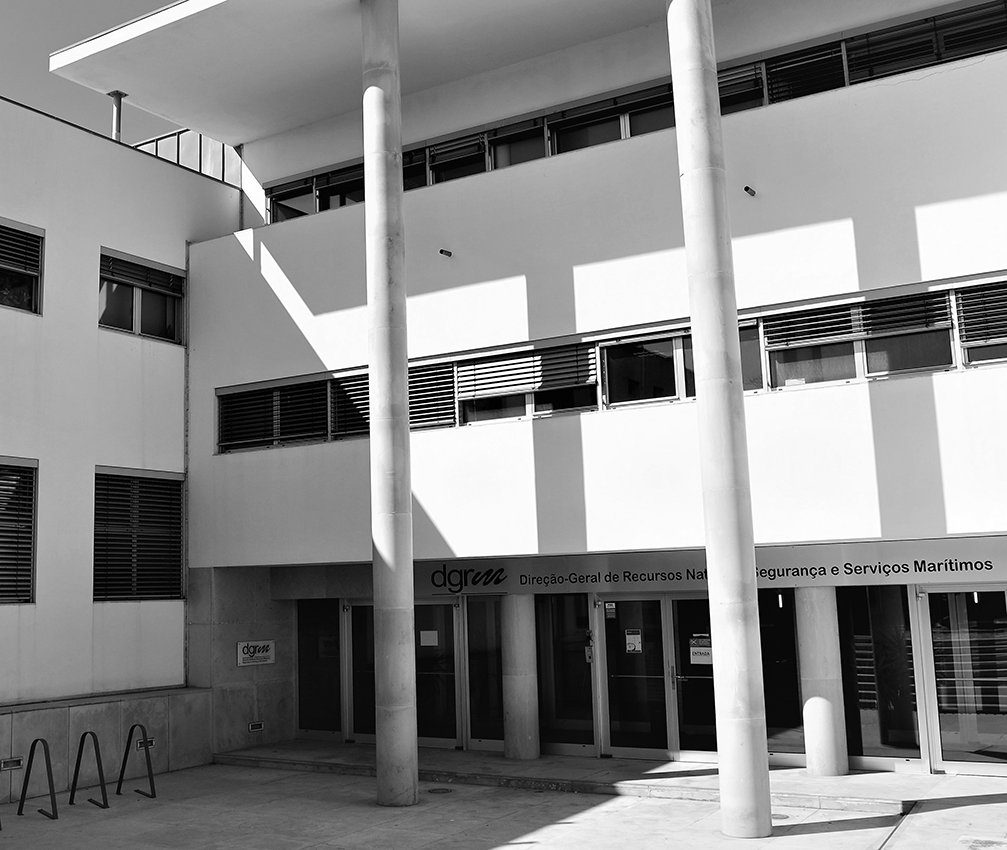
The DGRM – Directorate-General for Natural Resources, Safety and Maritime Services is a central government body responsible for implementing policies concerning the preservation and understanding of marine natural resources, fisheries, aquaculture, the processing industry and related activities, as well as policies concerning maritime safety and services, including the maritime and port sector.
The DGRM Historical Archive is undoubtedly one of the most important documentary collections for the study of Portugal’s contemporary maritime history. The documentation preserved there provides an insight into how the Portuguese State regulated access to and exploitation of marine resources from the second half of the nineteenth century onwards, and how it supervised and regulated some of the principal sectors of the so-called “maritime economy”, among which the fish-canning industry is particularly significant.
The broad chronological span of the documentation also makes it possible to study the continuities and transformations in Portuguese maritime policy over more than a century and across different political regimes — from the final years of the Constitutional Monarchy, through the First Republic and the Estado Novo, to the democracy established after the Revolution of 25 April 1974 — as well as Portugal’s participation in international organisations concerned with fisheries management.
The archive comprises 63 archival fonds of different origins, containing a wide variety of documents: minutes and minute books, drafts and preliminary versions, meeting notices and agendas, official correspondence and letter books, circulars and administrative orders, memoranda and opinions, reports, applications, studies and working papers, statistical and budgetary tables, draft legislation, ministerial decisions, inventories, reports and accounts, accounting books, individual files and management accounts, among many other records.
Of particular importance for the study of the Portuguese canning industry are the fonds originating from organisations that played a decisive role in the organisation, regulation and supervision of the sector, notably the Consórcio Português de Conservas de Sardinha (Portuguese Sardine Canning Consortium), the Instituto Português de Conservas de Peixe (Portuguese Institute of Fish Canning) and the Instituto Português de Conservas e Pescado(Portuguese Institute of Canned Fish and Fisheries).
Taken as a whole, the collection is therefore an essential source for understanding not only Portuguese canning companies, production and trade, but also State intervention, the institutional organisation of the sector and its development throughout the twentieth century.
A very special word of thanks goes to Dr Maria Manuela Gomes, Senior Officer at the DGRM, for her invaluable work in preserving this documentary heritage and for the exceptional assistance, availability and support she has provided during our visits to the DGRM Historical Archive.